
Tokyo Doesn’t Rush You—It Moves Around You
- Ralph

- Sep 24, 2025
- 6 min read
Updated: Oct 13, 2025
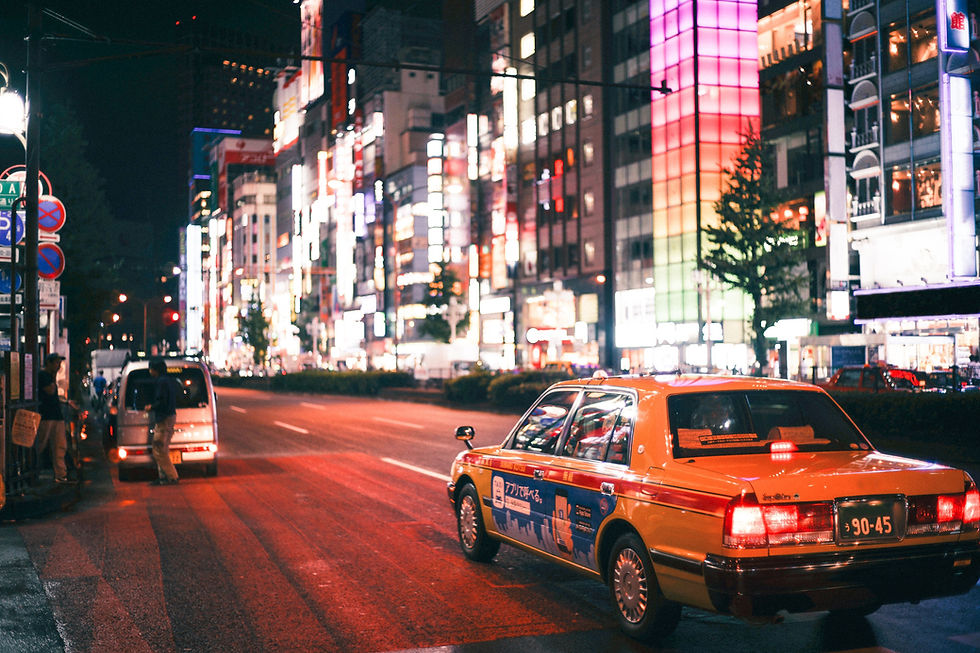
Inside a busy street
It’s the kind of city that seems to disappear the moment you try to define it. And yet, somehow, it always feels precise.
Lanterns glowing behind noren curtains. A vending machine humming beside a centuries‑old shrine. A silence in the subway so still it feels intentional.
Tokyo doesn’t demand attention. It earns it—quietly, beautifully, without effort.
At first glance, it’s ordered, efficient, unshakably polite. But look again, and it’s playful. Tender. Occasionally odd, and delightfully so.
Cats in bookstores. Jazz in basement bars. Wabi‑sabi in a moss‑covered garden wall. Cosplay next to ceremony. Origami next to neon.
You don’t “do” Tokyo. You listen to it. You walk with it. You let it teach you how to notice.
Phrases That Mean More Than They Say
“Irasshaimase!” – A greeting that means “welcome,” but feels more like a bow in sound.
“Yoroshiku onegaishimasu” – Said before doing something together. A promise of care, a hope for harmony.
“Daijōbu” – I’m okay. You’re okay. Everything’s okay. Spoken gently, but meant completely.
Kindness here doesn’t announce itself. It arrives quietly—in small gestures: a store clerk running after you with forgotten change. A stranger pointing you toward the right train, without being asked. An umbrella left behind, waiting for you to come back.
A Taste of Tokyo: Where the City Really Speaks
If you want to understand Tokyo, start with your tray.
The food is thoughtful, clean in its flavours, and full of quiet surprises. There’s no performance. Just intention.
But there are favourites:
Onigiri from convenience stores – soft rice triangles filled with pickled plum, seaweed, or miso—simple, perfect, eaten on the go
Vegetable tempura in Asakusa – light batter, crisp edges, served with dipping salt or soy, the vegetables chosen for season, not trend
Zaru soba in Shibuya – cold buckwheat noodles dipped into a cool, umami‑rich broth; refreshing, minimalist, deeply satisfying
Okonomiyaki in Shimokitazawa – savoury pancakes griddled with cabbage, yamaimo, and green onions; made just for you, just how you like it
Tofu hot pot in a Kyoto-style restaurant – bubbling gently in clay, surrounded by mushrooms, greens, and quiet steam
Inari sushi at a local market – sweet, vinegared rice tucked into fried tofu pouches; nostalgic, filling, humble
Matcha soft serve in Harajuku – grassy, cold, slightly bitter, melting into sweet
Dorayaki from a family-run sweet shop – two castella pancakes hugging red bean paste, wrapped in paper and memory
There’s always something warm in your hands: a cup of roasted hojicha, a steamed sweet potato, a box of bento eaten on a quiet bench.
Even late-night eats offer comfort—vegetable ramen, curry rice, tofu skewers from an izakaya tucked under the tracks.
Tokyo doesn’t compete with your senses. It calibrates them. Every bite, a gesture. Every meal, a moment.
This quiet, connected sense of place echoes the kind of mindful travel celebrated in The Art of a Calm Mind in a Busy World, where being fully present transforms even the simplest acts.
What Came Home
Tokyo doesn’t send you home with souvenirs. It sends you home with softness.
A packet of incense you still haven’t burned. A ceramic cup from a quiet alley in YanakaA pressed flower between train tickets. A pair of chopsticks chosen carefully from a shop with no sign, A pocketful of ¥100 coins that now feel too beautiful to spend
And something quieter still: A sense of calm precision. Of noticing details. Of walking slower—not because you’re tired, but because you want to.
This transformation echoes what I felt at sea in Across the Decks: A Sea Voyage to Shape Your Soul—that some journeys stay with you, beyond memory.
Beyond the Crosswalk: Day Escapes Worth the Journey
Nikko Temples in the trees. Bridges over silence. Moss that feels older than language.
Kamakura: Bamboo groves, the Great Buddha, and small cafés serving matcha with sweets. The sea is just a stroll away.
Mount Takao: A gentle hike from the city into cloud‑hugged woods. Tengu statues. Wildflowers. Hot soba at the summit.
Enoshima: An island where waves meet folklore. Shrines in caves, cats on stone paths, and views that ask you to stay a little longer.
Kawagoe: Called “Little Edo,” but full of its own charm—kurazukuri warehouses, sweet potato treats, and nostalgia in the air.
These journeys outward and inward mirror the kind of wandering and stillness you find in I s t a n b u l Doesn’t Pause; It Flows, where moving through place becomes part of becoming.
Markets: Tokyo’s Everyday Wonder
Ameya‑Yokochō in Ueno: Crowded, noisy, alive. Dried fruits, spices, street snacks, bargains with a side of personality.
Tsukiji Outer Market: Yes, it’s famous. And still worth it. Try the mochi, tamagoyaki, pickles, roasted chestnuts, and vegetable skewers.
UNU Farmers Market in Aoyama: Fresh produce, handmade goods, slow food in a fast city. The kind of place where people linger.
Nakamise‑dōri in Asakusa: Touristy? Yes. But charming. Senbei crackers, lucky charms, folding fans, and the scent of roasted tea.
The rhythm of markets — local, alive, sensory — brings to mind the market stories in Sydney: A City of Light and Shoreline, where food, place, and everyday life coalesce.
For the Artful & Curious
teamLab Planets: Step inside art. Touch light. Walk barefoot through water and wonder.
Nezu Museum: Minimal architecture, maximal peace. A hidden garden that feels like a haiku.
Mori Art Museum: Contemporary views—inside and out. The skyline through glass. Tokyo as canvas.
Ghibli Museum: Not just for children. Not really for tourists. Just… for those who still believe in wonder.
Bookstore Bunkitsu: More gallery than store. Curated titles. Entrance fee includes tea. Stay as long as you like.
The intersection of quiet creativity and city life here resonates with Hong Kong Doesn’t Whisper; It Speaks in Layers, where art and presence meet in everyday streets.
Literary Tokyo: For Those Who Read Between the Lines
Daikanyama T-Site: Part bookstore, part dream. Shelves like sculpture. Coffee, jazz, pages.
Jimbochō: Tokyo’s book district. Secondhand treasures. Dusty maps. Quiet discoveries.
Shinjuku’s Kinokuniya: Floors of books. Languages mixing. The kind of place you walk into for one thing and leave with seven.
A bench in Inokashira Park: A good book. A soft breeze. A koi pond nearby. Nothing else needed.
In the way Tokyo encourages you to slow and attend, there is a harmony with how The Art of a Calm Mind in a Busy World guides the reader inward.
Quick Notes from the Journey
Currency: Japanese Yen (JPY)
Cards Accepted: More and more, but keep some cash for smaller shops
Best Time to Visit: March–May (for blossoms) or October–November (for leaves)
Tap Water: Excellent—safe and clean
Transit: Impeccable. Get a Suica or Pasmo card and never look back
What to Pack: Layers, socks without holes (shoes come off often), and curiosity
Sundays: Quiet mornings, lively afternoons, golden light everywhere
Tipping & Everyday Kindness
Japan doesn’t tip. Not because it’s rude—because care is already built in.
Restaurants: No tips—just a polite bow, and a quiet “Gochisōsama deshita” ("Thank you for the meal")
Taxis: No tipping—just gratitude
Hotels: Not expected—but a small wrapped gift from your home country is considered thoughtful
Shops & cafés: Politeness is the currency
Final Thoughts: Tokyo, Unfolded
Tokyo doesn’t try to impress you. It simply is what it is—layered, refined, unapologetically itself.
It lives in a clean bento box. A quiet garden. A city view from a 7‑Eleven window. It’s in the bow of a shopkeeper. In the hush of a shrine. In vending machines that feel like friends.
It gives you space—to reflect, to wander, to be still.
And long after you leave, you’ll notice it in how you make your tea, fold your laundry, cross the street—more slowly, more gently, more attentively.
Because Tokyo never leaves you. It teaches you how to be.

